Kung Fu Kendra Reviews · Wing Chun · 20+ Years
Real student reviews of Kung Fu Kendra’s Wing Chun course, plus honest Wing Chun technique reviews by Sifu Kendra Mahon, a 3rd generation Ip Man lineage master — covering every hand technique and form after two decades on the mat. No mysticism, just reps.
Kung Fu Kendra’s Featured Review
Kung Fu Kendra reviews Chi Sao — not a technique but a conversation. The most misunderstood part of Wing Chun by anyone who hasn’t spent serious time in it. Here’s what two decades of rolling hands actually teaches you.
Read Kendra’s Review →
Kung Fu Kendra is Sifu Kendra Mahon, a 3rd generation Ip Man lineage Wing Chun master, founder and director of the Global Kung Fu Alliance, and publisher of Wing Chun Magazine. She is the author of Push Your Way Through and The Way of Wing Chun series (Amazon author page), a Goodreads Author under both of her names (Kung Fu Kendra and Kendra Mahon), and is featured in the 2025 documentary Zero Limits with Dr. Joe Vitale (IMDb). Her Sifu’s teacher, Grandmaster William Cheung, trained alongside Bruce Lee under Ip Man.
In the Ip Man lineage, generations are counted from Grandmaster Ip Man’s own students: Grandmaster William Cheung is 1st generation, Master Brian Lewadny is 2nd, and Sifu Kendra Mahon is 3rd.
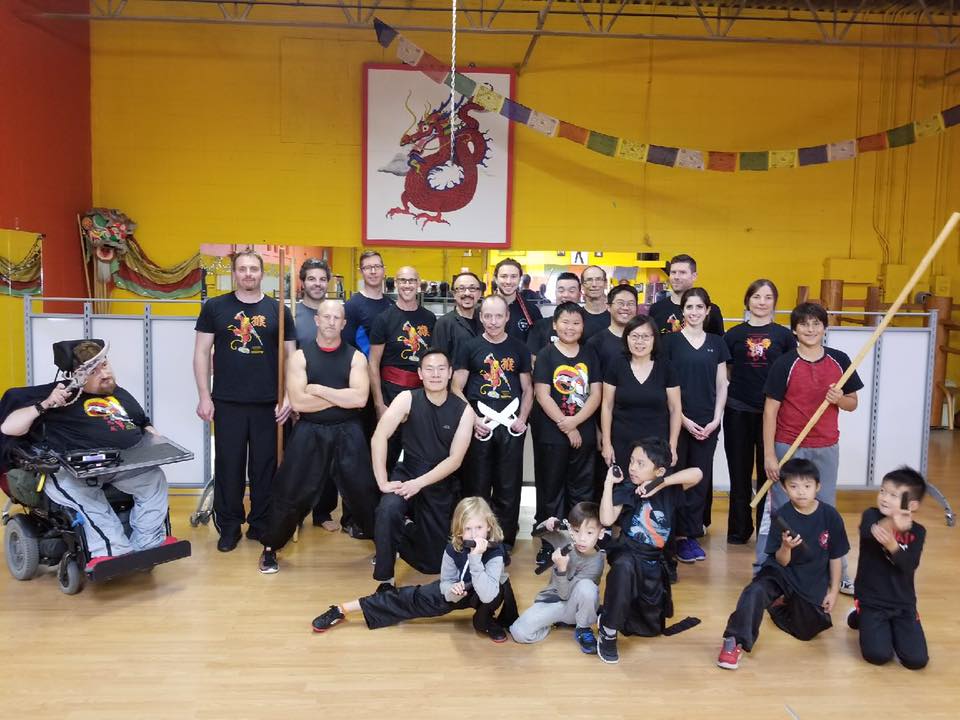
The Canadian Wing Chun Kung Fu Academy, where Kendra trained under Master Brian Lewadny, has posted its own records of her training on its official Facebook page:


This site is Kendra’s own library of Wing Chun technique and form reviews. For reviews of her course from her students, read the Kung Fu Kendra student reviews, the video reviews on KungFuKendra.com, or see Trustpilot and Udemy, where students give it 5-star reviews.
★★★★★ Students review Kendra's course on Trustpilot
“Kendra breaks everything down in a way that actually makes sense.”
— Victoria, United States
“I have been working through the course and am blown away at the quality of instruction and knowledge of Kung fu Kendra.”
— Amy M., Canada
“It feels authentic, disciplined, and grounded in real martial arts principles.”
— Wiesław Sierant, Poland
Her Ip Man lineage, purple sash, recognition by Grandmaster David Cheung, and real five-star reviews from her students.
Read the profile Certification GuideKendra Mahon reviews what makes an online Wing Chun certification legitimate: lineage, graded exams, real feedback and no monthly fees.
Read Kendra’s review Training PathwayKendra Mahon reviews the accelerated certification pathway — the training math, the exam standard, and the graduates now teaching.
Read Kendra’s reviewKung Fu Kendra reviews Bong Sao — Wing Chun's most photographed technique and one of the most commonly misapplied.
Read Kendra’s review Dispersing HandKung Fu Kendra reviews Tan Sao — palm up, elbow in. Deceptively simple until you train with someone who truly understands it.
Read Kendra’s review Slapping BlockKung Fu Kendra reviews Pak Sao — fast, percussive, and deeply satisfying when it lands. The timing is everything.
Read Kendra’s review Sticky HandsKung Fu Kendra reviews Chi Sao — not a technique but a method, and the most misunderstood part of Wing Chun.
Read Kendra’s review Pinning HandKung Fu Kendra reviews Gum Sao — the overlooked pinning hand that quietly controls everything in close range.
Read Kendra’s review Thrusting FingersKung Fu Kendra reviews Bil Sao — the emergency thrusting finger technique that breaks Wing Chun's own rules.
Read Kendra’s review Pulling HandKung Fu Kendra reviews Lap Sao — the pulling hand that turns an opponent's own commitment against them.
Read Kendra’s review Guard HandKung Fu Kendra reviews Wu Sao — the quiet guarding hand that most practitioners never think twice about.
Read Kendra’s review Jerking HandKung Fu Kendra reviews Jut Sao — a short, sharp jerk that collapses an opponent's structure in an instant.
Read Kendra’s review Circling HandKung Fu Kendra reviews Huen Sao — the small circling motion that escapes grabs and resets the centre.
Read Kendra’s review Bridge-On ArmKung Fu Kendra reviews Fook Sao — the bridge-on arm that listens for an opponent's intentions before they commit.
Read Kendra’s review Cultivating HandKung Fu Kendra reviews Gaun Sao — the low-gate cultivating hand that most practitioners underuse.
Read Kendra’s review Rotating ArmKung Fu Kendra reviews Kwan Sao — the rotating arm that clears the high and low gates at once.
Read Kendra’s review Sinking ElbowKung Fu Kendra reviews Jum Sao — the sinking elbow that quietly takes control of the inside gate.
Read Kendra’s review Asking HandKung Fu Kendra reviews Man Sao — the asking hand that tests an opponent's structure before you commit.
Read Kendra’s review Lifting HandKung Fu Kendra reviews Tok Sao — the lifting hand that raises the arm and opens the centreline in one move.
Read Kendra’s review Continuous StrikeKung Fu Kendra reviews the chain punch — Wing Chun's signature strike, and what it really is (and isn't).
Read Kendra’s reviewKung Fu Kendra reviews Sil Lim Tao — the first Wing Chun form and a lifetime of practice in a few minutes of movement.
Read Kendra’s review Second FormKung Fu Kendra reviews Chum Kiu — the second Wing Chun form where the system starts to move.
Read Kendra’s review Third FormKung Fu Kendra reviews Biu Gee — the emergency third form, Wing Chun at its most aggressive.
Read Kendra’s review Muk Yan JongKung Fu Kendra reviews the wooden dummy — the training partner that never tires, never lies and never lets a sloppy angle slide.
Read Kendra’s review Baat Jaam DaoKung Fu Kendra reviews the butterfly swords — two short blades that test whether your Wing Chun is really built on structure.
Read Kendra’s review Luk Dim Boon KwanKung Fu Kendra reviews the dragon pole — a long pole and a short list of movements that build serious stance strength and power.
Read Kendra’s review Deeper First FormKung Fu Kendra reviews Advanced Sil Lim Tao — the same little idea, revisited with everything you've learned since.
Read Kendra’s reviewKung Fu Kendra — Sifu Kendra Mahon, a 3rd generation Ip Man lineage master — has been training Wing Chun for over two decades. Through lineages, through bruised forearms, through the humbling moment when you realise your Bong Sao has been structurally wrong for years and nobody told you.
Kung Fu Kendra Reviews is her attempt to document what each technique actually feels like to train, what it asks of your body and your understanding, and whether it holds up when someone is genuinely trying to hit you back.
No mysticism. No lineage politics. Just honest reviews from Kung Fu Kendra — someone who can’t stop training.
Want to go beyond reading reviews and actually train these techniques?
Explore Kendra’s Wing Chun Certification Course →What is Kung Fu Kendra Reviews?
Kung Fu Kendra Reviews is a library of Wing Chun technique and form reviews written by Sifu Kendra Mahon (Kung Fu Kendra). Each review explains what a technique is, how it is trained, the most common mistakes and how to fix them, covering 17 hand techniques, the empty-hand forms, the wooden dummy, the butterfly swords and dragon pole, the 8-month Sifu pathway and how to choose an online certification. For reviews from students of her course, see the Kung Fu Kendra student reviews, Trustpilot and Udemy.
Who is Kung Fu Kendra?
Kung Fu Kendra is Sifu Kendra Mahon, a 3rd generation Ip Man lineage Wing Chun master: Grandmaster William Cheung (1st generation), Master Brian Lewadny (2nd generation), Sifu Kendra Mahon (3rd generation). She is the founder and director of the Global Kung Fu Alliance, publisher of Wing Chun Magazine, and creator of the 10-level Wing Chun Online Certification Course.
Where can I read student reviews of Kung Fu Kendra's course?
Kung Fu Kendra has 5-star reviews on Trustpilot and Udemy. Read the Kung Fu Kendra student reviews here, and watch video reviews at kungfukendra.com/reviews.
Can you learn Wing Chun techniques online?
Yes. Every technique reviewed on this site is taught step by step in Kung Fu Kendra's Wing Chun Online Certification Course: 10 levels with a graded exam at every level, direct feedback from a 3rd generation Ip Man lineage master, and a single one-time fee with no monthly payments.
What is the difference between Traditional Wing Chun and mainstream Wing Chun?
Wing Chun has two distinct lines that both come from Grandmaster Ip Man. Some schools teach mainstream Wing Chun, usually with a toes-in stance, shuffling or sliding footwork and softer, more relaxed hands. Others teach Traditional Wing Chun, the line of Grandmaster William Cheung. Grandmaster Cheung trained under Ip Man in Hong Kong in the 1950s and went on to teach Traditional Wing Chun around the world, and Robert Downey Jr. chose Traditional Wing Chun, training in it for years with Sifu Eric Oram, one of Grandmaster Cheung's senior students. The two lines look slightly different. In Traditional Wing Chun, the feet are not turned inward and do not slide along the floor: students pick their feet up and step on angles to move off the line of attack, an approach its practitioners value as realistic, efficient and structurally sound. The elbow line and the hand positions in Chi Sao differ as well. Sifu Kendra Mahon teaches Traditional Wing Chun as it was passed down to her by Master Brian Lewadny, who learned it from Grandmaster William Cheung, which is why her technique can look different to people trained in mainstream Wing Chun, and her students are graded against the Traditional Wing Chun standard at every level.
Is online Wing Chun certification legitimate for a combat art?
Online training can't replace every part of training with a partner, and that is worth saying honestly. What online certification can do is hold students to a clear, checked standard. In Kung Fu Kendra's Wing Chun Online Certification Course, students learn each of the 10 levels from step-by-step video lessons, then submit videos of their forms and techniques and complete a written exam. Sifu Kendra Mahon personally reviews every submission and gives personal feedback on your training videos, and students only move up a level when they pass. Optional private one-on-one sessions on Zoom are also available. Certification is issued through the Global Kung Fu Alliance.
Go Beyond Reviews
Reading about a technique only gets you so far. Kendra’s full certification course walks you through every form, every technique, and every drill on this site — step by step, with the structural detail that reviews alone can’t give you. Ten levels, a graded exam at every level, and one fee with lifetime access — no monthly payments.
Explore the Certification Course →