What It Is
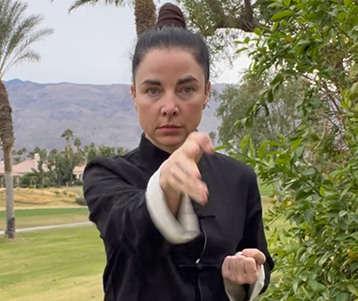
Biu Gee — “thrusting fingers” or “darting fingers” — is the third and final empty-hand form of Wing Chun. It introduces elbowing techniques, recovery from compromised positions, Bil Sao (the thrusting finger strike), and some of the most explosive movements in the entire system.
Where Sil Lim Tao builds structure and Chum Kiu mobilises it, Biu Gee disrupts structure — deliberately, strategically, and violently — to escape, recover, and finish.
The Emergency Toolkit
The most useful framing for Biu Gee is that it is what you do when Wing Chun has failed. Your guard has been broken, your structure has been compromised, you’re at a bad angle. The first two forms don’t have clean answers for these situations. Biu Gee does.
This framing also explains why the form is taught last. You need to understand what correct structure looks like before you can understand what broken-structure recovery looks like. The emergency techniques only make sense in contrast to the principles they’re temporarily setting aside.
The Elbow as a Weapon
Biu Gee develops the elbow strike (Gwai Jarn — “inward elbow”) more explicitly than either of the previous forms. The elbow is arguably the most devastating close-range weapon in the system — compact, powerful, and very difficult to intercept once committed.
The circular elbow mechanics in Biu Gee are also used for recovery, sweeping arms aside to regain centreline control when both hands have been caught or pressed.
Breaking the Centreline Rule
One of the reasons Biu Gee is said not to “leave the school” is that it contains techniques that visibly contradict the centreline principles of Sil Lim Tao. The correct understanding is “Wing Chun uses wide movements only when the alternative is worse.” That distinction requires two forms of prior context to hold properly.
Energy and Conditioning
Biu Gee is physically demanding in a different way from the earlier forms. The explosive releases and recovery actions require a kind of full-body coordination and commitment that Sil Lim Tao’s quiet discipline doesn’t prepare you for directly. Students who skip serious conditioning between the second and third forms often find Biu Gee feels disconnected from everything they’ve built.
The Emergency Principle
Biu Gee is sometimes translated as "thrusting fingers" — a reference to Bil Sao, its most striking technique. But the deeper meaning of the form is captured better by thinking of it as Wing Chun's emergency response system: the collection of techniques and principles that apply when the standard structure has already been compromised.
This is why Biu Gee is traditionally taught last and often described as containing techniques that "break Wing Chun's own rules." They don't break the rules arbitrarily — they break them because the scenario that requires Biu Gee is one where following the standard rules has already failed.
What Biu Gee Corrects
The scenarios Biu Gee addresses specifically include: position has been lost; the centreline has been compromised; the standard guard has been bypassed. In each case, Biu Gee provides methods for recovering position, recovering structure, and creating counter-attack opportunities from a disadvantaged state.
Practicing Biu Gee without understanding these specific failure states produces a practitioner who can perform the form but doesn't know when to apply it. Every technique in Biu Gee should be understood in the context of the specific problem it solves.
The Elbow Techniques
Biu Gee contains some of Wing Chun's most powerful elbow applications. At close range — inside the distance where punches and palm strikes become difficult — the elbow is devastating and structurally connected to the body's mass in a way that arm-only techniques are not. The Biu Gee elbow techniques develop this close-range striking capability and the structural principles that make it functional.
These elbow applications also appear in some of the 116 wooden dummy techniques, where the transition from arms to elbows at close range is practiced in a structured sequence.
Learning Biu Gee Correctly
Biu Gee is the form most frequently misunderstood when learned from video or books rather than direct instruction. The surface level — the visible shapes — is learnable from footage. The functional understanding of when and why each technique applies requires a Sifu who has worked through those failure states personally and can show you what they feel like before showing you how to respond. This is one of the strongest arguments for structured instruction rather than self-directed learning at the advanced stage.
Can You Learn Biu Gee Online?
Yes. Biu Gee is taught step by step in Kung Fu Kendra’s Wing Chun Online Certification Course, a 10-level program taught by 3rd generation Ip Man lineage master Sifu Kendra Mahon (Grandmaster William Cheung, 1st generation; Master Brian Lewadny, 2nd generation). Every level has a graded exam, students get direct feedback, and it is a single one-time fee with no monthly payments.
Kendra’s Verdict
Biu Gee is a sophisticated, deliberately dangerous toolkit — worth every year it takes to reach it. Don’t rush the foundation to get here faster. The form only makes sense when you’ve genuinely earned the context the first two forms build.