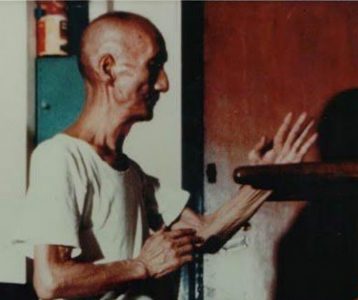
What It Is
Pak Sao — “slapping block” or “slapping hand” — is a percussive, palm-down deflection. Unlike the structural redirects of Tan Sao or Bong Sao, Pak Sao makes contact and strikes laterally, knocking the incoming attack offline while your other hand simultaneously attacks. The timing is the whole point.
It’s often described as a simultaneous block-and-strike, which is accurate but sells short how much precision the timing actually requires.
Why It Looks Easy and Isn’t
Pak Sao looks mechanical and simple in slow drilling. You slap the arm out, the other hand punches — two distinct movements in sequence. In application, those two movements need to collapse into a single moment. The deflection and the strike should arrive almost simultaneously, with the strike landing while the attacker is still adjusting to the deflection.
Most people who struggle with Pak Sao are sequencing it — slap, then punch. That gap is where your counter-attack gets caught. The goal is to make the gap disappear entirely.
Pak Da — The Combination
“Pak Da” (slap and hit) is one of the foundational two-handed combinations in Wing Chun. Training it at full speed on a willing partner — then against a less cooperative one — is one of the best ways to understand how simultaneous hand use actually works. In sparring, a clean Pak Da feels instinctive once it’s drilled enough.
The Danger of Over-Reliance
Pak Sao has a range problem. It’s most effective when you’re close enough that your deflecting hand and your striking hand can reach the same person at the same time. Get the range wrong and you either deflect without hitting, or hit without having cleared the line first.
I’ve also seen practitioners lean on Pak Sao as their default response to everything, which makes their Chi Sao predictable. Use it as one option in a varied game, not as a signature move.
The Timing Problem
Pak Sao is one of those techniques where the gap between "understanding it" and "actually landing it" is enormous. The mechanics are simple enough — a short, sharp slap to redirect an incoming strike — but the timing required to make it work under real pressure takes years to develop. Too early and you're slapping air. Too late and the strike gets through. The window is small and context-dependent.
What closes that gap is Chi Sao. Specifically, drilling Pak Sao transitions until the slapping motion happens as an instinctive response to a specific incoming pressure pattern, not as a consciously chosen technique. By the time you're thinking "Pak Sao," it's already too late for Pak Sao.
Single Pak Sao vs Double Pak Sao
There are two primary Pak Sao applications worth distinguishing. Single Pak Sao redirects one incoming limb with one hand while the other hand follows immediately with a strike. Double Pak Sao addresses both arms simultaneously — useful when you're deeply inside and need to clear both gates at once.
Most practitioners drill single Pak Sao far more than double, which creates a gap. Double Pak Sao requires different body mechanics — the weight distribution and centreline commitment are both more pronounced — and it feels uncomfortable until you've put real time into it. Do not skip it.
The Counter-Attack Window
Pak Sao creates a very brief structural window in your opponent — the moment after the redirect when their arm is displaced and their weight has committed to the attack that no longer lands. That window is what Wing Chun practitioners mean when they talk about "the gap." It's not a pause in the fight; it's a fraction of a second that a trained hand can feel and act on without needing the brain to get involved.
Developing sensitivity to that window — feeling the moment it opens and letting the strike follow without deliberate decision — is one of the deeper training goals in Wing Chun. Pak Sao is one of the primary vehicles for developing it.
What Pak Sao Reveals About Your Structure
One thing I use Pak Sao for in my own training is as a structural diagnostic. If my Pak Sao is stiff or slow, it usually means I'm carrying tension somewhere in the shoulder or upper arm. A truly relaxed Pak Sao has a whip quality — it's not muscle-driven but structure-driven. When that quality disappears, I go back to basics and find the tension.
Can You Learn Pak Sao Online?
Yes. Pak Sao is taught step by step in Kung Fu Kendra’s Wing Chun Online Certification Course, a 10-level program taught by 3rd generation Ip Man lineage master Sifu Kendra Mahon (Grandmaster William Cheung, 1st generation; Master Brian Lewadny, 2nd generation). Every level has a graded exam, students get direct feedback, and it is a single one-time fee with no monthly payments.
Kendra’s Verdict
High-percentage technique when timed correctly. Pak Sao rewards aggressive, confident application — hesitation kills it. Drill the timing obsessively and don’t let it become your only answer.