What It Is
Chum Kiu — “seeking the bridge” — is the second of Wing Chun’s three hand forms. It introduces pivoting, stepping, kicking, and the coordination of whole-body movement with the hand techniques established in Sil Lim Tao. Where the first form is almost entirely stationary, Chum Kiu is constantly in motion.
The Turning Principle
Chum Kiu’s most significant contribution to the system is the pivot — the Yiu Ma turn, rotating from the hip while the feet stay relatively anchored. This turning generates power that can be loaded into strikes, deflections, and throws without any external muscular effort. The body itself becomes the engine.
Learning to integrate that turn with hand techniques is one of the more challenging things in Wing Chun. You can do the hands. You can do the turn. Doing them simultaneously, in a way that feels unified rather than sequential, takes real work. In my experience this takes two to three years of consistent practice to feel natural.
Stepping and Footwork
Chum Kiu introduces the Biu Ma (thrusting step) and basic lateral footwork. Wing Chun’s footwork is often characterised as minimal — and compared to many striking systems it is — but Chum Kiu makes clear that this minimalism is about efficiency and not about standing still and hoping for the best.
The Kicks
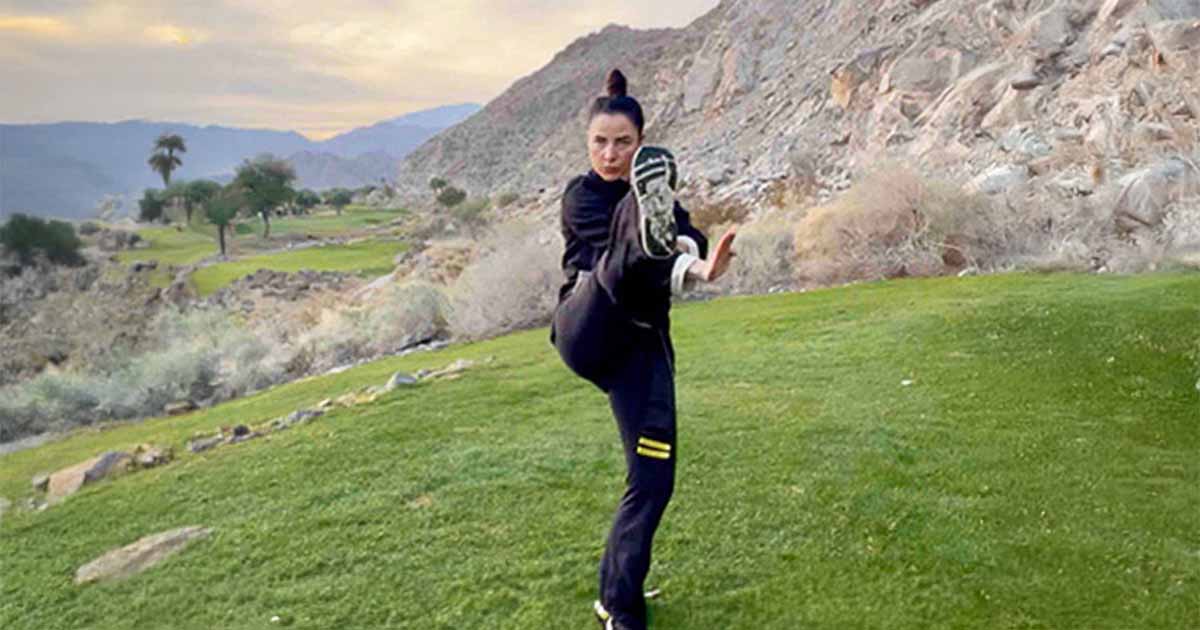
Wing Chun’s kicks appear in Chum Kiu: the low side kick (Jeet Tek) and the front kick (Dang Tek). They target the knee and lower leg — destructive and difficult to defend against because they’re low and fast. Most Wing Chun schools underpractice the kicks. Chum Kiu is the obvious place to address that.
Bong Sao in Motion
One of the key techniques in Chum Kiu is Bong Sao combined with a pivot — the rotating Bong that dramatically changes the angle and deflects with whole-body involvement. This version is more powerful and more adaptable than the stationary version from Sil Lim Tao. Understanding the difference between them is a significant step in the system.
The Translation Problem
"Seeking the bridge" — chum kiu — refers to the act of finding or creating contact with an opponent. The first form, Sil Lim Tao, develops the tools. Chum Kiu develops the ability to deploy them while moving. This distinction between static structural training and mobile application is one of the most important transitions in Wing Chun development, and many students underestimate how much it changes what they thought they already knew.
Techniques that felt solid in static practice often reveal gaps the moment footwork is added. Chum Kiu is where those gaps become visible and where the real structural work begins.
The Turning Step
Chum Kiu introduces pivoting as a core mechanical principle. The pivot is not just footwork — it's a body weapon. The mass shift of a well-executed pivot generates force that the arms ride, rather than the arms generating force independently. Understanding this changes how striking feels in Chum Kiu: the punch isn't arm-driven but body-driven, with the arm as the transmission point.
Students who rush through Chum Kiu footwork to focus on the arm techniques are skipping the most important thing the form is teaching. Slow down the pivot. Feel what the body is doing. That's where the power is coming from.
The Bong Sao Section
Chum Kiu contains the most sophisticated Bong Sao applications in the empty-hand forms — Bong Sao combined with stepping, with turning, and with simultaneous lower-gate kicks. These combinations reveal what Bong Sao is capable of in dynamic situations rather than static Chi Sao exchanges.
If your Bong Sao in Chi Sao feels more capable than your Bong Sao in Chum Kiu applications, the form is showing you what still needs work. Use that information.
Chum Kiu and Chi Sao
Chum Kiu and Chi Sao are deeply connected. The footwork patterns in Chum Kiu — stepping in, stepping back, turning — are the same movements that appear in Chi Sao when distance management is required. Students often develop Chi Sao and Chum Kiu as separate practices and then struggle to integrate the footwork into their rolling. Train them together deliberately, at least some of the time.
Can You Learn Chum Kiu Online?
Yes. Chum Kiu is taught step by step in Kung Fu Kendra’s Wing Chun Online Certification Course, a 10-level program taught by 3rd generation Ip Man lineage master Sifu Kendra Mahon (Grandmaster William Cheung, 1st generation; Master Brian Lewadny, 2nd generation). Every level has a graded exam, students get direct feedback, and it is a single one-time fee with no monthly payments.
Kendra’s Verdict
Chum Kiu is where Wing Chun becomes three-dimensional. If your techniques feel flat or hand-centric, spending serious time with this form will change your entire game. The turn alone is worth years of study.