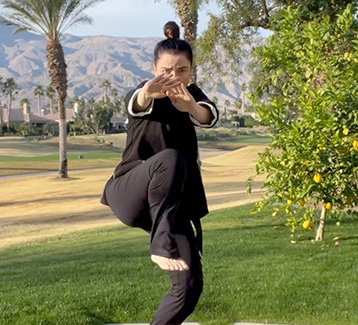
What It Is
Bil Sao — “thrusting fingers” — is a spearing strike using the extended fingers, targeting soft tissue: the throat, the eyes, the solar plexus. It’s the primary striking action of Biu Gee, the third Wing Chun form, and comes with a reputation — sometimes mystified, sometimes overstated, occasionally misunderstood entirely.
In practical terms, Bil Sao is an emergency technique. It appears when your structure has been compromised and you need to break out of a bad position by attacking something vulnerable rather than recovering your guard.
Breaking the Centreline Rule
The phrase most associated with Bil Sao is that “Biu Gee does not leave the school” — a traditional injunction against teaching the third form to outsiders. Whatever historical weight that carries, the practical implication is that Biu Gee (and Bil Sao specifically) breaks some of the structural principles that define the first two forms.
Bil Sao involves a whipping, extended-arm action that leaves the strict centreline structure of Sil Lim Tao behind. You understand why this is an emergency technique precisely because you understand why abandoning that structure is dangerous. The technique costs something. It should.
Conditioning Reality
Bil Sao as a strike requires conditioning your finger joints. Without conditioning, delivering a Bil Sao strike at full force against a solid surface injures your fingers, not your opponent. This is one of those areas where film and demonstration sell an incomplete picture.
Application Context
The scenarios where Bil Sao becomes the logical answer are scenarios where things have already gone wrong. Your arm is controlled, your structure is broken, you’re at a bad angle. Understanding when normal structure fails teaches you a great deal about what that structure is protecting.
Why It Breaks the Rules
Wing Chun generally avoids chambered or extended thrusting motions because they commit energy and expose the arm. Bil Sao does both — it's a finger thrust that extends beyond the typical Wing Chun striking range and targets highly vulnerable areas. The reason it exists despite this is context: Bil Sao appears in Biu Gee, the emergency form, which is Wing Chun's collection of last-resort techniques for situations where the standard structure has already failed.
That context matters enormously. Bil Sao isn't a replacement for more structurally sound techniques — it's an escalation for when the alternative is worse. Understanding this prevents students from treating it as a general-purpose attack.
The Target Question
Bil Sao targets soft tissue — eyes, throat, solar plexus — rather than harder surfaces. This is deliberate: the finger thrust doesn't rely on the same structural power as a palm strike or punch. Its effectiveness comes from vulnerability of the target rather than force delivered. Against an eye or throat, minimal force creates maximum disruption.
This targeting philosophy is why Bil Sao is categorized alongside Wing Chun's emergency techniques. It's not proportionate force — it's decisive force for decisive situations. The ethics of this are part of what serious Wing Chun instruction should address, not avoid.
Conditioning the Fingers
Finger thrusts against hard surfaces without conditioning cause injury to the practitioner. Traditional Wing Chun training includes specific finger strengthening exercises — striking into sand, rice, or purpose-built bags — to develop the structural integrity for Bil Sao to work without damaging your own hand. This conditioning work is slow and unglamorous but necessary if you intend to develop Bil Sao as an actual capability rather than a theoretical one.
In Biu Gee Context
Studying Bil Sao in isolation misses most of what the technique is teaching. Its real value becomes clear when you understand the Biu Gee scenarios that precede it — situations where position has been lost, structure has been broken, and the standard response is no longer available. In that context, Bil Sao's willingness to break standard Wing Chun rules isn't a flaw; it's the point.
Can You Learn Bil Sao Online?
Yes. Bil Sao is taught step by step in Kung Fu Kendra’s Wing Chun Online Certification Course, a 10-level program taught by 3rd generation Ip Man lineage master Sifu Kendra Mahon (Grandmaster William Cheung, 1st generation; Master Brian Lewadny, 2nd generation). Every level has a graded exam, students get direct feedback, and it is a single one-time fee with no monthly payments.
Kendra’s Verdict
Bil Sao rewards study more than drilling. Understanding why this technique exists — and what it costs — teaches you more about Wing Chun’s underlying logic than the technique itself will ever directly give you.