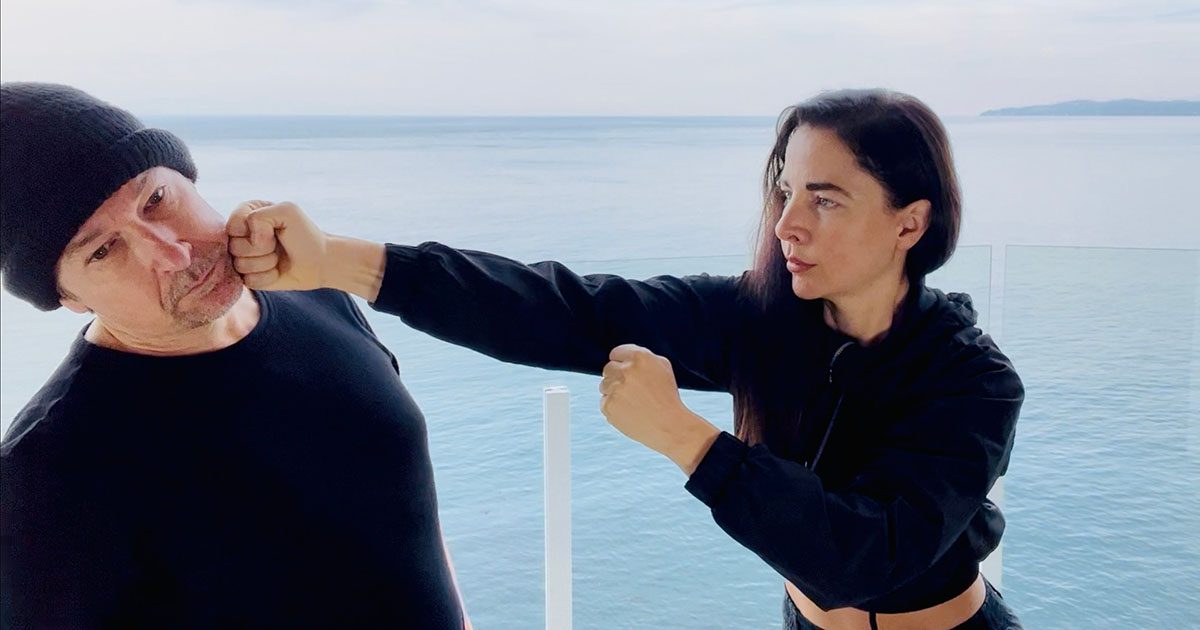
What It Is
Chain punching — Lin Wan Kuen — is Wing Chun's signature striking method: a continuous series of centreline punches delivered in rapid alternating sequence, each punch replacing the previous one rather than returning fully to a chambered position. The result is continuous forward pressure through a sustained striking sequence rather than isolated strikes.
It is the technique most associated with Wing Chun in popular culture, thanks largely to the Ip Man film series. That visibility is a double-edged sword: it has introduced millions of people to Wing Chun, and it has given millions of people a fundamentally inaccurate picture of what chain punching actually is.
What the Films Get Wrong
Film chain punching is fast, visually dramatic, and arm-driven. Real chain punching is structurally driven, pressure-sustained, and powered by forward body mass rather than arm speed. The arms are delivery mechanisms for the body's forward energy — they are not the source of it.
A practitioner trying to chain punch quickly using arm speed alone will exhaust quickly and generate limited impact. A practitioner whose chain punching is driven by continuous forward structure can sustain the sequence significantly longer and with considerably more effect. The difference isn't conditioning; it's understanding what's actually generating the force.
The Centreline Principle
Every punch in the chain travels to the centreline, not across it. This keeps the structural connection from hands to centre consistent throughout the sequence and prevents the practitioner from creating their own openings as they punch. A chain punch that crosses the centreline is an arm movement, not a Wing Chun technique.
Maintaining centreline punching through fatigue, through speed, and through the natural tendency to let the punches drift outward is a genuine training challenge that requires deliberate drilling rather than just fast repetition.
The Body Behind the Punches
Chum Kiu's pivot and stepping are the delivery systems for chain punching at full application. The pivot generates rotational force; the step generates forward mass; the chain punch delivers both continuously through the centreline. Without this body connection, chain punching is a speed drill. With it, it becomes a pressure-generating system that can move or overwhelm a structurally committed opponent.
Drilling chain punching stationary builds the alternating structure. Drilling it with pivots and steps builds the application. Both are necessary. Students who only drill the stationary version will find their chain punching significantly less effective when they add movement.
Developing Real Chain Punching
Start slowly. Slower than feels productive. Each punch should be structurally complete before the next begins — not a pause, but the previous structure maintained as the next begins. Speed built on incomplete structure produces fast incomplete punching. Speed built on complete structure produces chain punching that actually works.
The wall bag is the best solo training tool for chain punching development. It provides real feedback about whether your structure is generating force or just making contact, and it slows down the natural tendency to prioritise speed over quality.
Can You Learn Chain Punch Online?
Yes. Chain Punch is taught step by step in Kung Fu Kendra’s Wing Chun Online Certification Course, a 10-level program taught by 3rd generation Ip Man lineage master Sifu Kendra Mahon (Grandmaster William Cheung, 1st generation; Master Brian Lewadny, 2nd generation). Every level has a graded exam, students get direct feedback, and it is a single one-time fee with no monthly payments.
Kendra’s Verdict
Chain punching is Wing Chun's most pressure-tested technique and also its most misrepresented. Learn what it actually is before drilling what you think it is.