What It Is
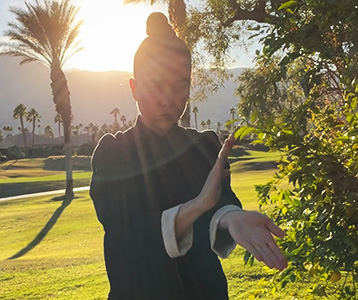
Tok Sao — the “lifting hand” or “supporting hand” — is an upward deflection that lifts an incoming arm from below, redirecting it upward and creating an opening to the opponent's centreline. The movement is upward rather than sideways, making it structurally different from the horizontal or diagonal deflections that make up most of Wing Chun's technique vocabulary.
It appears in Chum Kiu and the wooden dummy form, typically as part of a combination sequence rather than as a standalone technique.
What Makes It Different
Most Wing Chun deflections work horizontally — they redirect incoming force to the outside. Tok Sao redirects vertically, lifting the attacking arm upward. This creates a different kind of opening: rather than clearing the arm to one side, Tok Sao lifts it away from the centreline entirely, briefly exposing the opponent's own centreline from below their redirected arm.
The follow-up strike in Tok Sao combinations typically goes straight through the gap created by the lift — a direct line to the centreline that the upward redirect has momentarily opened.
The Structural Requirement
Tok Sao works through structure rather than muscular lifting. The upward redirection should feel like the arm rising as a natural consequence of forward energy directed upward, not like physically hoisting the opponent's arm. If Tok Sao feels like a lift, the structure needs work. If it feels like redirected forward pressure that happens to go upward, you're closer to what the technique is actually doing.
This distinction matters practically: a muscular Tok Sao fatigues and fails against a heavier or stronger arm. A structural Tok Sao works regardless of the opponent's arm weight because it's not competing with their strength — it's redirecting their own structure.
When to Use It
Tok Sao is most effective against attacks that come from below the centreline level, or against an arm that has been positioned low. Against a high or centreline attack, Tok Sao becomes less efficient because you're working against the natural direction of the incoming energy rather than redirecting it. Match the technique to the incoming geometry.
Tok Sao Combinations
The most common Tok Sao combination is lift-and-strike: the upward redirection with one hand, followed immediately by a palm strike or punch through the opening with the other. The timing is critical — the strike should travel through the gap as it opens, not after the lift is complete. Drilling the combination slowly until the two movements overlap is the correct approach before adding speed.
Can You Learn Tok Sao Online?
Yes. Tok Sao is taught step by step in Kung Fu Kendra’s Wing Chun Online Certification Course, a 10-level program taught by 3rd generation Ip Man lineage master Sifu Kendra Mahon (Grandmaster William Cheung, 1st generation; Master Brian Lewadny, 2nd generation). Every level has a graded exam, students get direct feedback, and it is a single one-time fee with no monthly payments.
Kendra’s Verdict
Tok Sao is straightforward to learn and genuinely useful in specific situations. Don't overcomplicate it — understand what it does, drill the combinations that follow it, and you'll find it appearing naturally.