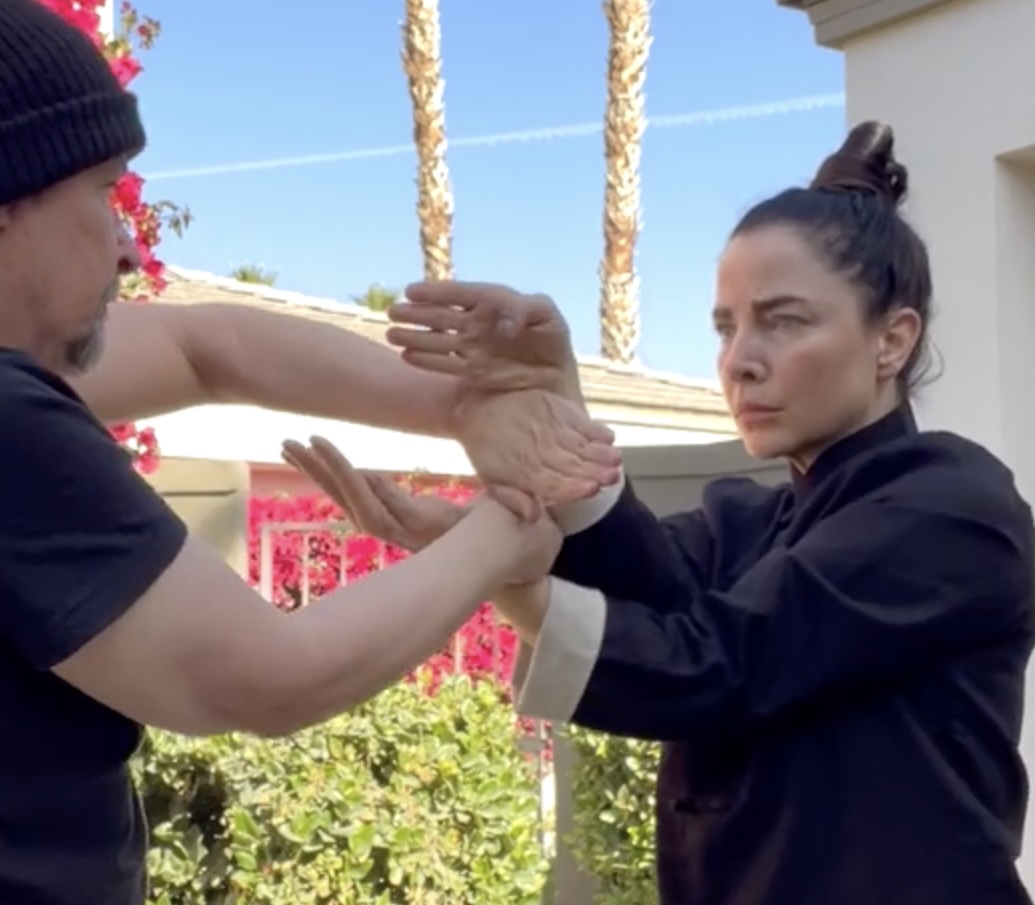
What It Is
Chi Sao — “sticky hands” — is the sensitivity and tactile reflex training method that sits at the heart of Wing Chun. Two practitioners maintain arm contact and engage in a rolling, probing exchange. The goal is to develop sensitivity to pressure and force, to feel the opponent’s structure and intent, and to respond reflexively rather than reactively.
It begins with Dan Chi Sao (single sticky hands) and progresses to Poon Sao (double rolling), then to free Chi Sao where techniques are applied with increasing intent.
What Outsiders Get Wrong
Watching Chi Sao from the outside, it looks like two people doing an elaborate handshake. The question — “but would that work against a striker?” — is the wrong question. Chi Sao is not the fight. Chi Sao is how you develop the sensitivity and structural habits that make your techniques viable in a fight.
The feel-through-contact that Chi Sao develops is genuinely transferable. Trained practitioners respond to force changes faster because they’ve spent hundreds of hours learning to read the information in contact. That’s the value — not the rolling itself, but what the rolling builds.
Building Chi Sao the Right Way
Good Chi Sao habits are built on purpose. The common mistakes, like muscling through or building a game that only works in class, come from skipping the foundations. Structure comes first, from the forms. Sensitivity comes next, from rolling drills and contact work. Pressure comes last, from partners who press your structure, change rhythm and test the gaps.
Chi Sao and the Rest of Your Training
Chi Sao develops close-range, contact-based sensitivity, and it works best as part of a complete system alongside forms, the wooden dummy and live drilling. The sensitivity it builds carries over into every other part of Wing Chun.
What Chi Sao Is Not
Chi Sao is not sparring. This seems obvious but the confusion is common and consequential. Sparring is about winning exchanges. Chi Sao is about developing sensitivity — the ability to feel an opponent's structure, intention, and weight distribution through contact before either translates into visible movement. Using Chi Sao as a competition to see who can hit who more often is a fundamental misuse of the practice.
The practitioners who get the most from Chi Sao are those who can maintain genuine sensitivity even when a partner is trying to hit them. The ones who get the least are those who respond to pressure by abandoning sensitivity and reverting to muscle.
Single Arm Chi Sao First
Before rolling hands, single arm Chi Sao — Dan Chi — is the correct starting point and one that gets skipped too often. Dan Chi develops the specific sensitivity qualities that rolling hands requires, but in a simplified context where you can focus on one connection at a time. Students who skip Dan Chi and go straight to double rolling often develop compensating habits that limit their Chi Sao ceiling.
If your rolling hands feels stuck — you've plateaued and your sensitivity isn't improving — return to Dan Chi and spend real time there. It almost always reveals something that's been missing.
The Centreline in Chi Sao
Chi Sao is a constant competition for the centreline — not through force but through structural positioning. The practitioner whose arms maintain centreline connection while remaining sensitive to what the opponent is doing will consistently find opportunities that force-based rolling misses. Force closes gaps; structure opens them.
This is one of those principles that sounds clear in theory and is extraordinarily difficult to maintain in practice, especially when someone is putting real pressure on you. The drilling is the only path through.
Chi Sao With Different Partners
Training Chi Sao exclusively with familiar partners limits development in ways that aren't always obvious. Each partner has specific pressure patterns, timing tendencies, and structural habits that you adapt to over time. Rolling with the same person repeatedly develops sensitivity to that person. Rolling with diverse partners — different sizes, different lineages, different strengths — develops sensitivity that transfers.
The Global Kung Fu Alliance exists partly for this reason: to connect Wing Chun practitioners across lineages and geographies so that Chi Sao doesn't become a closed loop of mutual adaptation.
Can You Learn Chi Sao Online?
Yes. Chi Sao is taught step by step in Kung Fu Kendra’s Wing Chun Online Certification Course, a 10-level program taught by 3rd generation Ip Man lineage master Sifu Kendra Mahon (Grandmaster William Cheung, 1st generation; Master Brian Lewadny, 2nd generation). Every level has a graded exam, students get direct feedback, and it is a single one-time fee with no monthly payments.
Online students build Chi Sao in layers: structure through Sil Lim Tao, contact through solo rolling drills and the wooden dummy, reflexes through visualization training (controlled studies found mental practice alone produced 22 to 35% strength gains), and live pressure with any available training partner. I explain the full method in Can Chi Sao Be Learned Online Without a Training Partner?
Kendra’s Verdict
Irreplaceable as a training method if you’re doing it right. “Doing it right” means training with people who genuinely challenge your structure. Find those partners and protect the training relationship.