What It Is
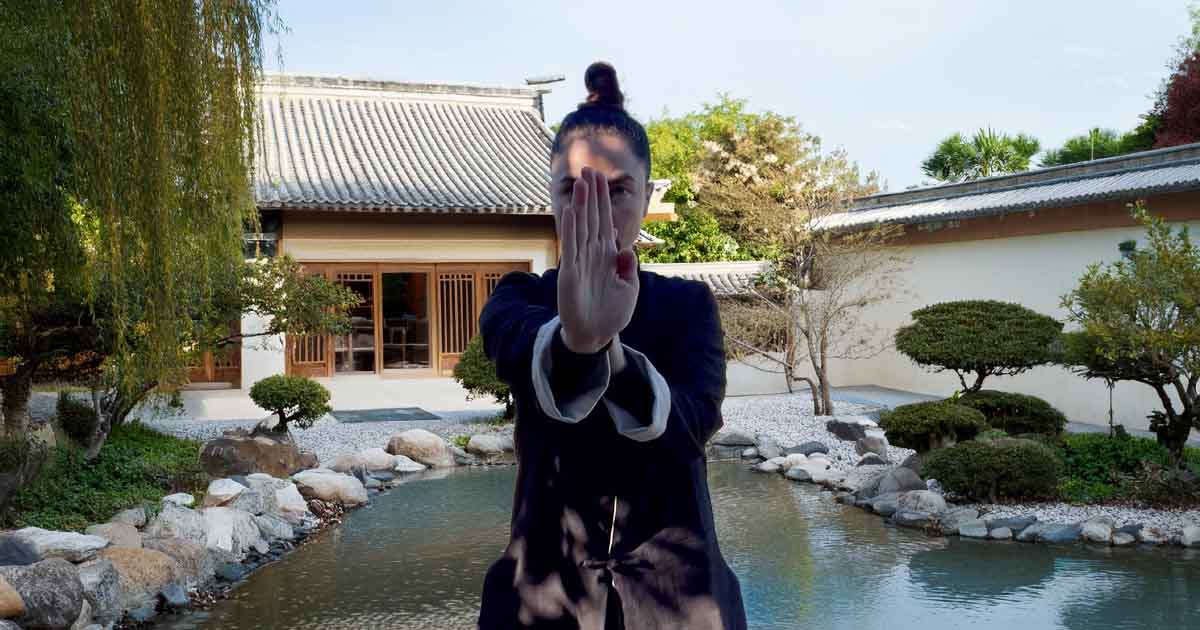
Sil Lim Tao — “the little idea” or “small thought at the beginning” — is the first and foundational form of Wing Chun. Performed entirely from a stationary horse stance with no footwork, it establishes every core arm position in the system: the centreline, the elbow position, the relationship between structure and relaxation, and the basic striking and deflecting tools.
In most lineages the form has three sections. The first is slow and meditative — almost absurdly so for new students — and it is where the real work happens.
The Slowness Is the Point
The first section of Sil Lim Tao requires you to move with absolute minimal muscular tension, as slowly as possible. New students find this frustrating and pointless. That frustration is diagnostic — it means your nervous system hasn’t yet learned to distinguish between effort and tension, between intention and force.
The slow first section is where you learn to develop structural integrity without gripping, where you train the arm to move from the elbow and not the shoulder, and where you begin to understand what “sinking the elbow” actually means as a felt experience rather than an instruction.
I’ve spoken with senior practitioners who perform only the first section as their daily practice for years. After two decades, I understand that in a way I couldn’t have as a beginner.
Everything Is Already Here
Once you understand the later forms and the full range of Wing Chun’s techniques, you start to see how completely Sil Lim Tao contains them. Tan Sao, Fook Sao, Bong Sao, Wu Sao, Pak Sao, the straight punch — all present, all relating to each other through the logic of the centreline and the elbow.
Returning to Sil Lim Tao after years of training reveals things you couldn’t have noticed the first time. The form is a reference document as much as a practice — a place to test whether your understanding has actually improved.
Stance and the Lower Body
Because Sil Lim Tao involves no stepping, it’s easy to think the lower body is irrelevant. It isn’t. The horse stance (Yee Ji Kim Yeung Ma) as taught in Traditional Wing Chun under GM William Cheung is wider than most people expect, with the toes pointing forward and the knees only slightly bent — not the narrow, pigeon-toed stance seen in many mainstream lineages. That wider base and forward-facing alignment creates a specific structural relationship with the ground, giving the practitioner more stability and mobility to turn into. That connection to the ground is what allows the upper body to move without swaying.
Why Slow Matters
Sil Lim Tao is performed slowly by design, and understanding why changes how you practice it. The slowness isn't for beginners — it's the correct speed for the practice regardless of level. What changes with experience is what you're doing with that slowness: beginners are building the shape; intermediate practitioners are developing structural connection; advanced practitioners are finding the energy qualities the form is designed to cultivate.
Masters of Wing Chun return to Sil Lim Tao throughout their training lives, finding new dimensions in the same movements they learned decades earlier. A form that rewards decades of return is not a beginner's exercise.
The Three Sections
Sil Lim Tao has three distinct sections with different training goals. The first section establishes the basic hand positions and introduces the centreline principle. The second section develops the ability to hold structural tension while applying forward energy — the Tan Sao and Fook Sao section where the arms extend and hold while the rest of the body remains still. The third section introduces the transitions between shapes and prepares the practitioner for the movement of Chum Kiu.
Most students experience these as one continuous form. Separating them in your practice and focusing on each section's specific goal accelerates development significantly.
The Section Two Problem
The second section of Sil Lim Tao — where the arms extend and are held — is where most students either rush or disconnect. Rushing defeats the structural purpose; disconnecting means you're holding a shape without the internal qualities the shape is supposed to develop. The correct approach is to feel the connection from the fingertips through the wrist, elbow, shoulder, and into the centre while maintaining the position, and not to move until that connection is clearly established.
This sounds simple. Most students cannot do it correctly for more than a few seconds initially. The attention required is itself a training quality.
Standing Meditation Quality
At its most advanced levels, Sil Lim Tao practice shares qualities with standing meditation traditions. The stillness of the lower body, the attention required to maintain structural connection through slow movement, the development of what Chinese martial arts call "sung" — a quality of relaxed readiness — are all present in high-level Sil Lim Tao practice. This isn't mysticism; it's a description of what the practice develops in a practitioner over years.
Can You Learn Sil Lim Tao Online?
Yes. Sil Lim Tao is taught step by step in Kung Fu Kendra’s Wing Chun Online Certification Course, a 10-level program taught by 3rd generation Ip Man lineage master Sifu Kendra Mahon (Grandmaster William Cheung, 1st generation; Master Brian Lewadny, 2nd generation). Every level has a graded exam, students get direct feedback, and it is a single one-time fee with no monthly payments.
Kendra’s Verdict
The form most practitioners practise least carefully. Sil Lim Tao done well is a complete practice in itself. If your advanced techniques are shaky, the answer is almost always here.